Glucosinolates in Cruciferous Veggies: Cancer Protection?
Cancer is frightening not only because of the presence of a tumor itself, but because of its ability to invade surrounding tissues and metastasize to distant parts of the body. For this reason, modern cancer prevention focuses not solely on treating cancer after it has formed, but on intervening earlier—by inhibiting carcinogenesis, limiting tumor invasion, and reducing the likelihood of malignant cell spread. Within this preventive framework, a unique group of plant compounds found in cruciferous vegetables—glucosinolates—has attracted increasing scientific attention.
What Are Glucosinolates?
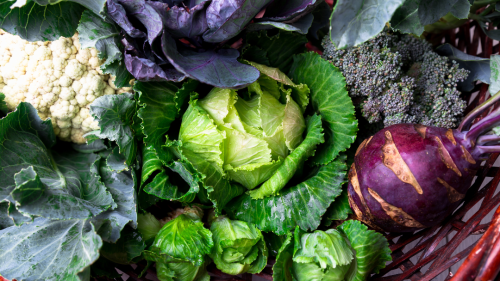
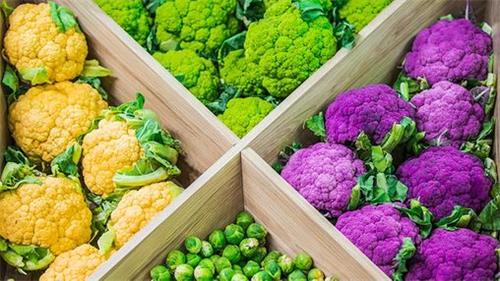
Glucosinolates are sulfur-containing compounds naturally present in cruciferous vegetables such as broccoli, cauliflower, cabbage, kale, mustard greens, bok choy, and Brussels sprouts. Unlike vitamins or minerals, glucosinolates belong to a category known as plant secondary metabolites. These compounds did not evolve to nourish humans; rather, they serve as part of the plant’s own chemical defense system against insects, fungi, and environmental stressors.
In intact plant tissue, glucosinolates themselves are biologically inactive. They are stored separately from an enzyme called myrosinase, which resides in different cellular compartments. When the plant is chopped, chewed, blended, or otherwise physically damaged, cell walls rupture, allowing glucosinolates and myrosinase to come into contact. This triggers a rapid enzymatic reaction that produces several breakdown products, including isothiocyanates, nitriles, and thiocyanates.
Among these compounds, isothiocyanates—especially sulforaphane, which is abundant in broccoli and broccoli sprouts—are the most extensively studied and appear to be responsible for many of the health-related effects attributed to cruciferous vegetables. The characteristic pungent, slightly bitter flavor of these vegetables is a sensory marker of this biochemical transformation.
Anti-Cancer Effects: Prevention, Not Treatment
It is crucial to clarify a common misconception. Glucosinolates and their breakdown products are not cancer treatments, nor are they substitutes for medical therapy. Their strongest and most consistent effects are observed in cancer prevention, a process often referred to as chemoprevention.
At the molecular level, sulforaphane is a potent activator of the Nrf2 (nuclear factor erythroid 2–related factor 2) signaling pathway, one of the body’s central antioxidant and detoxification systems. Activation of Nrf2 leads to increased expression of phase II detoxifying enzymes, including glutathione S-transferases and quinone reductase. These enzymes help neutralize reactive carcinogens and reduce oxidative damage to DNA.
In practical terms, this mechanism functions like a cellular “cleanup crew,” enhancing the body’s ability to process and eliminate potentially harmful compounds before they can initiate malignant changes.
Beyond antioxidant defense, isothiocyanates have been shown to suppress key inflammatory pathways, including NF-κB, a transcription factor closely linked to chronic inflammation. Persistent low-grade inflammation is widely recognized as a fertile ground for cancer development, promoting tumor growth, angiogenesis, and metastasis. By dampening inflammatory signaling, glucosinolate-derived compounds help create a less favorable environment for cancer initiation and progression.
Emerging research also suggests that these compounds influence epigenetic regulation, including DNA methylation and histone modification. Through these mechanisms, they can modulate the expression of genes involved in cell proliferation, apoptosis, and tumor suppression—essentially “turning down” oncogenic signals while supporting protective ones.
Evidence from Laboratory Studies
In cell culture and animal studies, extracts from glucosinolate-rich vegetables such as bok choy and broccoli have demonstrated clear anti-tumor activity. These extracts can reduce the viability of colorectal cancer cells, induce programmed cell death (apoptosis), and inhibit cancer cell invasion into surrounding tissues.
Such findings provide compelling mechanistic support for the anti-cancer potential of glucosinolates. However, results from laboratory models must always be interpreted with caution. The controlled conditions, high concentrations, and simplified biological systems used in experimental settings do not fully reflect the complexity of human physiology.
What Do Human Studies Show?
Because of ethical and practical limitations, it is impossible to conduct randomized trials in humans that precisely replicate laboratory conditions. As a result, the strongest human evidence comes from epidemiological studies rather than intervention trials.
Multiple population-based studies have consistently found that people who regularly consume cruciferous vegetables have a lower risk of several cancers, including lung, colorectal, and breast cancer.
A notable example is a meta-analysis published in BMC Gastroenterology, in which Chinese researchers pooled data from seven cohort studies and ten case–control studies, encompassing approximately 640,000 individuals, nearly 100,000 of whom were diagnosed with colorectal cancer. Quantitative analysis revealed a clear inverse association between cruciferous vegetable intake and colorectal cancer risk.
Importantly, the dose–response analysis offered practical insight. Protective effects began to appear at an intake of roughly 20 grams per day. The greatest risk reduction—approximately 20% to 26%—was observed at daily intakes of 40–60 grams. Beyond this range, additional consumption did not confer significantly greater benefits. This suggests that moderate, consistent intake is more effective than excessive consumption.
The Principle of “The Dose Makes the Poison”
The story of glucosinolates illustrates a classic principle in toxicology and nutrition: the dose makes the poison. For insects and pathogens, these compounds are indeed toxic. In the human body, however, carefully regulated exposure transforms them into beneficial signaling molecules that activate endogenous defense systems.
Cruciferous vegetables also provide far more than glucosinolates alone. They are rich in vitamin C, folate, flavonoids, and dietary fiber. These nutrients interact synergistically, forming a complex network that likely produces greater health benefits than any isolated compound taken as a supplement.
How to Eat Cruciferous Vegetables for Maximum Benefit
Because glucosinolates must be converted into active compounds, preparation matters. Chopping, chewing, or blending breaks down plant cell walls and allows myrosinase to interact with glucosinolates. Letting chopped vegetables sit for a few minutes before cooking gives the enzymatic reaction time to occur.
Cooking methods also influence bioavailability. Light steaming for 3–5 minutes is generally considered optimal—it softens fibers while preserving much of the enzymatic activity and active compounds. Prolonged boiling not only destroys myrosinase but also causes water-soluble glucosinolates to leach into cooking water.
Even when heat inactivates plant myrosinase, the gut microbiota can partially compensate by converting glucosinolates into bioactive isothiocyanates.
Broccoli sprouts deserve special mention, as they contain particularly high concentrations of sulforaphane precursors. Fermented foods such as kimchi or sauerkraut introduce microbial activity that can alter glucosinolate profiles, generate new bioactive compounds, and reduce certain anti-nutritional factors.
Who Should Be Cautious?
Despite their benefits, cruciferous vegetables are not universally appropriate in large amounts. Individuals with iodine deficiency–related goiter, thyroid disorders, or those undergoing iodine therapy should limit raw intake or consume these vegetables thoroughly cooked, as certain sulfur compounds can interfere with iodine uptake.
People with sensitive digestion or a tendency toward bloating may also need to moderate intake due to the high fiber content. Additionally, high-dose cruciferous vegetable extracts may interfere with liver enzymes involved in drug metabolism, potentially affecting medications such as warfarin. Normal dietary consumption poses little risk, but concentrated supplements should be used cautiously.
Genetic variability also plays a role. Polymorphisms in enzymes responsible for metabolizing isothiocyanates mean that individuals may experience different degrees of benefit from the same foods—an area of growing interest within precision nutrition.
Conclusion
A simple plate of broccoli represents far more than a side dish. It embodies millions of years of plant evolution, intricate biochemical interactions within the human body, thoughtful choices made in the kitchen, and emerging insights from nutritional science. Cruciferous vegetables are not miracle cures, but when consumed regularly and appropriately, they contribute meaningfully to cancer prevention by strengthening the body’s own protective systems.
In many cases, the most profound health wisdom lies not in exotic supplements or extreme interventions, but in consistent, mindful engagement with the natural foods that have accompanied human diets for generations.
This article is for educational and informational purposes only and does not constitute medical or nutritional advice. Individual health needs and responses may vary. Please consult a qualified healthcare professional before making any significant changes to your diet, supplements, or medical care.
References
1. Fahey, J. W., Zalcmann, A. T., & Talalay, P. (2001). The chemical diversity and distribution of glucosinolates and isothiocyanates among plants. Phytochemistry, 56(1), 5–51.
2. Higdon, J. V., Delage, B., Williams, D. E., & Dashwood, R. H. (2007). Cruciferous vegetables and human cancer risk: Epidemiologic evidence and mechanistic basis. Pharmacological Research, 55(3), 224–236.
3. Zhang, Y., Talalay, P., Cho, C. G., & Posner, G. H. (1992). A major inducer of anticarcinogenic protective enzymes from broccoli: Isolation and elucidation of structure. Proceedings of the National Academy of Sciences, 89(6), 2399–2403.
4. Kensler, T. W., Egner, P. A., Agyeman, A. S., et al. (2013). Keap1–Nrf2 signaling: A target for cancer prevention by sulforaphane. Topics in Current Chemistry, 329, 163–177.
5. Wu, Q. J., Yang, Y., Vogtmann, E., et al. (2013). Cruciferous vegetables intake and the risk of colorectal cancer: A meta-analysis of observational studies. BMC Gastroenterology, 13, 114.
6. Tang, L., Zirpoli, G. R., Guru, K., et al. (2010). Intake of cruciferous vegetables modifies bladder cancer survival. Cancer Epidemiology, Biomarkers & Prevention, 19(7), 1806–1811.
7. Traka, M. H., & Mithen, R. F. (2009). Glucosinolates, isothiocyanates and human health. Phytochemistry Reviews, 8, 269–282.
Recommended for you