Can Food Lower Your Risk of Depression? Here’s What Science Says

Mental health disorders have become an increasingly serious global public health challenge and are now among the leading causes of premature mortality worldwide. Nearly 30% of people will experience a mental health disorder at some point in their lives, and these conditions rank among the top contributors to disability-adjusted life years (DALYs). Despite their prevalence, a substantial portion of the suffering associated with mental illness—particularly depression—is potentially preventable.
Traditionally, depression has been viewed primarily as a psychological condition or as the result of imbalances in brain chemistry, with treatment focused on psychotherapy and pharmacological interventions. While these approaches remain essential, a growing body of evidence suggests that lifestyle factors—especially diet—play a meaningful role in both the development and management of depression.
This emerging understanding has given rise to a rapidly developing interdisciplinary field known as nutritional psychiatry, which explores how diet and nutrition influence brain function, emotional regulation, and mental health outcomes. Rather than asking only what should be avoided, nutritional psychiatry increasingly focuses on what we should actively consume to create a biological environment that supports mental well-being.
Why Would Diet Affect Mood in the First Place?
Food is not merely a source of calories. Nutrients derived from our diet directly influence the neuroendocrine system, immune function, inflammatory processes, and the gut microbiome—all of which play critical roles in mental health.
Poor dietary quality can lead to nutrient deficiencies, chronic low-grade inflammation, oxidative stress, and disruptions in neurotransmitter synthesis. Over time, these biological changes may increase vulnerability to mood disorders. According to the International Society for Nutritional Psychiatry Research, diet quality is now recognized as a significant modifiable risk factor for mental illness, and nutritional interventions are increasingly being considered as part of comprehensive mental health strategies.
Dietary Patterns Matter More Than “Happy Foods”
When people think about food and mood, they often focus on specific “comfort foods” such as chocolate or sweets. While these foods may provide temporary emotional relief, scientific evidence suggests that long-term dietary patterns, rather than individual foods, have the strongest and most consistent associations with depression risk.
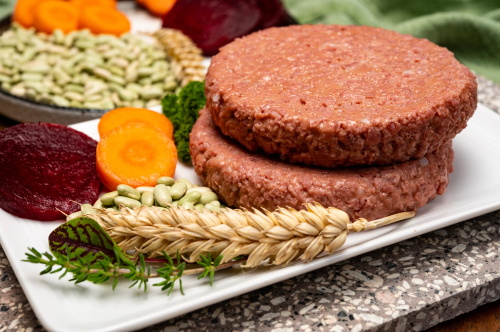
Large-scale prospective studies show that diets rich in plant-based foods and low in red meat and ultra-processed products are associated with a significantly lower risk of developing depression. One particularly influential study followed more than 180,000 participants for an average of 11.6 years and found that those who most closely adhered to the EAT-Lancet healthy reference diet had approximately a 20% lower risk of depression compared to those with the lowest adherence.
These protective dietary patterns share common features: high intake of vegetables, fruits, whole grains, legumes, nuts, and seeds; moderate consumption of fish and poultry; and limited intake of red meat, added sugars, and highly processed foods. Such diets provide a broad spectrum of nutrients and bioactive compounds that work synergistically to support brain health.

Fruits, Vegetables, and the Unique Role of Citrus
Among individual food groups, higher fruit and vegetable consumption is consistently associated with fewer depressive symptoms. Specific foods—such as tomatoes, dark leafy greens, and berries—appear particularly beneficial.
Citrus fruits, however, have attracted special attention in recent research. A study conducted by researchers at Harvard University reported that individuals who consumed one orange per day had a 22% lower risk of developing depression compared with those who rarely consumed citrus fruits. Notably, this association could not be explained simply by vitamin C intake.
Further analysis revealed that citrus consumption was associated with changes in the abundance of 15 different gut microbial species, most notably an increase in Faecalibacterium prausnitzii. This bacterium is known for its anti-inflammatory properties and has been linked to improved gut and immune health. Researchers hypothesize that F. prausnitzii may influence depression risk by modulating the production of neurotransmitters such as serotonin and dopamine.
Interestingly, flavonoids found in citrus fruits—particularly naringenin and hesperetin—were strongly associated with reduced depression risk, whereas vitamin C intake alone was not. These findings provide compelling evidence for an interaction between diet, gut microbiota, and mental health, and they highlight potential targets for future therapeutic strategies.
The Gut–Brain Axis: A Critical Link
The gut is increasingly recognized as a central player in mental health. Far from being a passive digestive organ, the gut functions as a complex metabolic and neuroendocrine system. A healthy gut microbiome can ferment dietary fiber into short-chain fatty acids, which have anti-inflammatory effects and can influence brain function through neural, immune, and hormonal pathways.
Moreover, gut microbes are involved in the synthesis of precursors for key neurotransmitters, including serotonin and dopamine—chemical messengers that directly affect mood. Remarkably, approximately 90% of the body’s serotonin is produced in the gut rather than the brain. Disruptions in the gut microbiome may therefore have far-reaching consequences for emotional regulation and depression risk.
Key Nutrients That Support Emotional Health
In addition to dietary patterns, specific nutrients have been linked to mental health outcomes. Tryptophan, an essential amino acid, is required for serotonin synthesis. B vitamins, particularly B6, B12, and folate, are involved in neurotransmitter metabolism and the regulation of homocysteine levels; deficiencies in these vitamins have been associated with higher rates of depression.
Omega-3 fatty acids (EPA and DHA), flavonoids, zinc, and magnesium are thought to reduce neuroinflammation and oxidative stress—both of which are increasingly recognized as underlying mechanisms in depression. Importantly, these nutrients rarely act in isolation. Whole dietary patterns that supply multiple beneficial compounds simultaneously tend to be more effective than single-nutrient supplementation.
Diet as an Adjunct, Not a Replacement, for Treatment
It is crucial to emphasize that dietary changes are not a substitute for professional mental health treatment. For individuals with clinically diagnosed depression, psychotherapy and medication remain essential. However, research indicates that incorporating structured dietary guidance—such as adherence to a Mediterranean-style diet—can enhance the effectiveness of conventional treatments.
For the general population, dietary interventions are particularly valuable as preventive tools and as supportive strategies for improving emotional resilience. Long-term consistency and balance matter far more than short-term enthusiasm for any single “superfood.”
Emotional Eating: Short-Term Comfort, Long-Term Consequences
The relationship between food and emotion is complex, and not all food-related mood effects are beneficial. Many people experience what is often referred to as “emotional hunger”—a form of eating driven not by physiological energy needs but by psychological distress.
When individuals feel stressed, anxious, or depressed, the brain often craves high-carbohydrate and high-fat foods because they provide quick energy and transient mood improvement. However, this can lead to a learned dependency: emotional discomfort becomes associated with eating certain foods, reinforcing a cycle that ultimately undermines long-term emotional stability.
Replacing these habits with nutrient-dense foods, physical activity, or emotional support strategies—such as talking with others—can help disrupt this cycle and support healthier coping mechanisms.

Diets That Increase Depression Risk
Just as some dietary patterns are protective, others appear to increase vulnerability to depression. Diets high in red meat, added sugars, and ultra-processed foods are frequently associated with higher depression risk. These eating patterns tend to be low in essential nutrients while promoting inflammation and gut microbiome imbalance, both of which may negatively affect mental health.
Cultural and Social Dimensions of Diet and Mental Health
Dietary influences on mental health are also shaped by culture and socioeconomic conditions. Lower depression rates observed in Mediterranean regions are often attributed, in part, to traditional dietary habits. Similarly, Japanese diets rich in seafood, fermented foods, and seaweed provide nutrients that support both gut and brain health.
At the same time, access to healthy foods is unevenly distributed. Fresh produce and high-quality protein sources are often less accessible or affordable for lower-income populations, who also face higher risks of depression. The global proliferation of ultra-processed foods raises important questions about whether modern dietary shifts are contributing to rising mental health challenges worldwide.
Final Thoughts
Current scientific evidence suggests that food cannot cure depression, but it can meaningfully influence the risk of developing it and support emotional well-being. Diet shapes the biological environment in which the brain operates, affecting inflammation, neurotransmitter production, and gut health.
Improving diet does not require perfection. Rather, it involves making sustainable, long-term choices that support both physical and mental health. In this sense, eating well is not merely about nourishment—it is a foundational act of caring for the mind as well as the body.
This article is for educational and informational purposes only and does not constitute medical or nutritional advice. Individual health needs and responses may vary. Please consult a qualified healthcare professional before making any significant changes to your diet, supplements, or medical care.
References
1. Sarris, J., Logan, A. C., Akbaraly, T. N., Amminger, G. P., et al. (2015). Nutritional medicine as mainstream in psychiatry. The Lancet Psychiatry, 2(3), 271–274.
2. Lassale, C., Batty, G. D., Baghdadli, A., Jacka, F., et al. (2019). Healthy dietary indices and risk of depressive outcomes: a systematic review and meta-analysis. Molecular Psychiatry, 24(7), 965–986.
3. Willett, W., Rockström, J., Loken, B., Springmann, M., et al. (2019). Food in the Anthropocene: the EAT–Lancet Commission on healthy diets from sustainable food systems. The Lancet, 393(10170), 447–492.
4. Grosso, G., Micek, A., Castellano, S., Pajak, A., et al. (2016). Dietary flavonoid intake and depression: a systematic review. Journal of Affective Disorders, 190, 19–27.
Recommended for you