Fermentation 2.0: Merging Thousand-Year-Old Wisdom with AI for Smarter, Greener Food Production
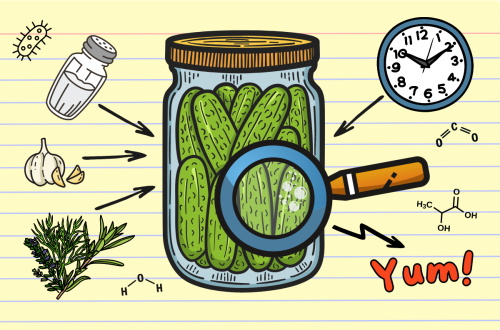
Amid the deep integration of biotechnology and intelligent manufacturing, the field of biological fermentation—one of humanity’s oldest production technologies—is undergoing a fundamental transformation. For thousands of years, fermentation relied largely on human experience and intuition. Today, artificial intelligence (AI) is reshaping this process, driving it toward data-driven precision, higher efficiency, and significantly lower carbon emissions.
Fermentation is a core enabling technology of modern biomanufacturing, with extensive applications across food, pharmaceuticals, energy, and chemical industries. From soy sauce, yogurt, and alcoholic beverages to antibiotics, enzymes, and bioethanol, countless products depend on stable and efficient microbial fermentation. Yet despite its long history, traditional fermentation has been constrained by persistent technical limitations—process opacity, imprecise control, and slow response to change.
AI is now breaking these constraints, enabling fermentation systems to evolve from “experience-based trial and error” to “intelligent, predictive, and optimized production.”
The “Black Box” Problem of Traditional Fermentation
In conventional fermentation processes, fermentation tanks often function like “black boxes.” Operators can monitor only a limited set of external parameters—such as temperature, pH, or dissolved oxygen—while the internal physiological state of microorganisms remains largely invisible. Whether microbes are metabolically active, nutritionally stressed, or shifting toward unwanted byproducts is often inferred indirectly, and sometimes too late.
Time is another critical variable. Microorganisms exhibit dramatically different behaviors at different growth stages, with rapidly changing demands for nutrients, oxygen, and environmental conditions. Minor delays or misjudgments can significantly impact yield, consistency, or even lead to batch failure.
To maintain product quality, engineers traditionally rely on years—sometimes decades—of accumulated hands-on experience. Manual intervention is often required around the clock, making fermentation labor-intensive, difficult to standardize, and highly dependent on individual expertise. Knowledge transfer is challenging, and process stability can suffer when experienced operators are unavailable.
AI Enters the System: Making Fermentation Visible, Predictable, and Controllable
Artificial intelligence fundamentally changes this paradigm by turning fermentation from an opaque process into a transparent, data-rich system. Through the deployment of dense sensor networks, AI-enabled fermentation platforms can collect hundreds of parameters in real time, including temperature profiles, pH fluctuations, dissolved gases, substrate concentrations, and microbial activity indicators.
Advanced analytical tools—such as online Raman spectroscopy—allow AI systems to “see through” the fermentation tank, directly measuring substrate consumption and product formation without interrupting the process. What was once invisible is now continuously observable.
More importantly, AI introduces time-aware intelligence into fermentation control. Research teams, including those at Shanghai Jiao Tong University, have pioneered systems that explicitly incorporate the time dimension into process modeling. These systems can predict optimal operational strategies tens or even hundreds of hours into the future, based on current fermentation states.
This predictive capability acts like a “time telescope,” allowing operators to anticipate problems before they occur. Instead of reacting after yields decline or byproducts accumulate, AI enables proactive adjustments that keep the process on its optimal trajectory.
Precision Control: Keeping Microorganisms in Their Optimal State
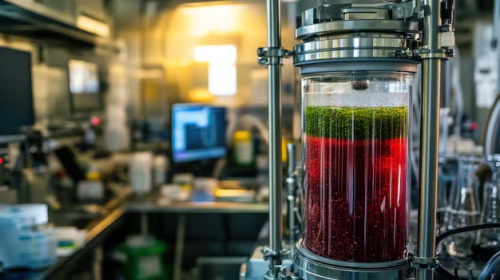
With predictive models in place, AI systems can dynamically adjust fermentation parameters at millisecond-level resolution. Feed rates, temperature curves, aeration intensity, and agitation speeds are continuously fine-tuned to maintain microorganisms in their most productive metabolic state.
Rather than following fixed recipes or conservative safety margins, AI-driven fermentation adapts in real time to the actual needs of the microbial culture. This results in higher product yields, reduced batch-to-batch variability, and improved overall process stability.
In practical applications, such as bioethanol production, AI-assisted fermentation has demonstrated yield improvements exceeding 10%, while significantly reducing process fluctuations. The result is not only more output, but output that is consistently reproducible across batches, facilities, and even geographic regions.
From Master Craftsmen to “Digital Experts”
Traditional fermentation has long relied on the tacit knowledge of experienced operators—often described as “master craftsmen.” These individuals develop an intuitive understanding of fermentation through sensory cues such as smell, foam formation, or subtle temperature changes. While invaluable, this knowledge is difficult to formalize, teach, or scale.
Machine learning enables AI systems to absorb decades of accumulated production data, including both successful and failed batches. By identifying patterns and correlations that humans may overlook, AI transforms implicit human expertise into explicit, quantitative models.
These “digital experts” do not tire, forget, or retire. They can simultaneously manage thousands of fermentation tanks worldwide, continuously learning from new data and refining their decision-making algorithms. Each production cycle makes the system more accurate and robust, creating a self-improving feedback loop.
Importantly, AI does not eliminate the role of human expertise—it preserves and amplifies it. The experience of master operators becomes embedded in algorithms that can be shared, reused, and improved indefinitely.
The Fermentation Tank as a “Microbial Farm”
A useful way to understand intelligent fermentation is to imagine the fermentation tank as a closed “microbial farm.” Inside live billions of microscopic “workers”—yeast, bacteria, or fungi—tasked with converting raw materials such as grains or soybeans into desired products like alcohol, amino acids, or organic acids.
In traditional fermentation, managing this farm resembles the work of an experienced but limited farmer. The farmer knows roughly when to fertilize or cool the environment, guided by experience and external observations. However, they cannot see the condition of every plant or the precise needs of each plot of land. As a result, yields fluctuate and losses occasionally occur.
With AI, a “super-intelligent farm manager” takes over. Sensors function as eyes and ears, monitoring every aspect of the microbial environment in real time. AI analyzes these data streams continuously, assessing microbial health, metabolic efficiency, and resource utilization.
If the system detects early signs of stress or declining productivity, it can immediately intervene—long before problems become visible to human operators. Feeding becomes precise “drip irrigation,” supplying nutrients exactly when and where they are needed, minimizing waste while maximizing microbial efficiency.
How AI Directly Enables Low-Carbon Fermentation
Beyond productivity gains, AI plays a crucial role in driving low-carbon fermentation through three core mechanisms: improving quality, reducing consumption, and increasing efficiency.
First, precision control dramatically reduces waste. By avoiding overfeeding, unnecessary cooling, or ineffective fermentation phases, AI enables producers to generate more product using fewer raw materials, less energy, and less water. For example, producing one ton of product may require only 1.05 tons of raw material instead of 1.2 tons under conventional control—an immediate reduction in upstream agricultural and processing emissions.
Second, AI optimizes energy use by coordinating with high-efficiency equipment. Magnetic levitation air compressors, for instance, consume approximately 20% less energy than traditional models. AI ensures these systems operate consistently under optimal conditions, unlocking their full energy-saving potential.
Temperature management provides another major opportunity. Rather than running cooling systems at constant maximum power, AI anticipates environmental changes—such as cooler nighttime temperatures—and adjusts cooling strategies accordingly. This intelligent modulation mirrors the energy savings achieved by smart climate control systems in modern buildings.
Third, AI accelerates the development of fermentation processes based on non-food feedstocks, such as lignocellulosic biomass and organic waste. By rapidly exploring vast parameter spaces, AI shortens development cycles and improves conversion efficiency, reducing reliance on food-grade crops like corn or wheat and lowering the carbon footprint of the entire value chain.
AI systems can also facilitate the integration of renewable energy sources—such as solar power or biogas—by aligning fermentation energy demand with green energy availability.
Technology as Preservation, Not Replacement
A critical misconception is that AI aims to replace human craftsmanship. In reality, its greatest contribution may be the preservation and amplification of traditional expertise. By digitizing centuries-old fermentation knowledge, AI ensures that artisanal techniques are not lost, but instead gain new life in modern industrial contexts.
What was once dependent on individual intuition becomes a shared, data-driven foundation for the entire industry. Fermentation processes evolve from relying on vague experiential judgment to being guided by precise, predictive insight.
Ultimately, artificial intelligence enables producers to achieve more with less—fewer resources, lower emissions, and greater consistency—while honoring the deep historical roots of fermentation. In doing so, it allows an ancient craft to thrive within a sustainable, intelligent, and low-carbon future.
References
- Liu, X. et al. (2024). Artificial intelligence applications in bioprocessing and fermentation systems. Processes.
- Li, J., & Wang, Q. (2024). Smart fermentation technologies for traditional and industrial foods. Fermentation.
- García Martín, H. et al. (2020). Machine learning–driven optimization in biological manufacturing. Nature Communications.
- European Commission. (2022). Digitalisation and decarbonisation in industrial biotechnology.
Recommended for you